Buy validcc.eu ?
We are moving the project
validcc.eu .
Are you interested in purchasing the domain
validcc.eu ?
domain@kv-gmbh.de · 0541-91531010
Buy validcc.eu ?
Why are the square numbers called square numbers?
Square numbers are called square numbers because they represent the area of a square with sides of equal length. For example, the number 4 is a square number because it represents the area of a square with sides of length 2. Similarly, the number 9 represents the area of a square with sides of length 3. This geometric interpretation is why these numbers are called square numbers. **
What are square numbers and square roots?
Square numbers are the result of multiplying a number by itself. For example, 4 is a square number because 4 x 4 = 16. Square roots, on the other hand, are the inverse operation of squaring a number. The square root of a number is a value that, when multiplied by itself, gives the original number. For example, the square root of 25 is 5 because 5 x 5 = 25. **
Similar search terms for TONA-EXPERT-E113910-Square
Top-Angebote
Products related to TONA-EXPERT-E113910-Square:
-
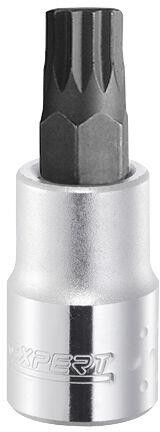
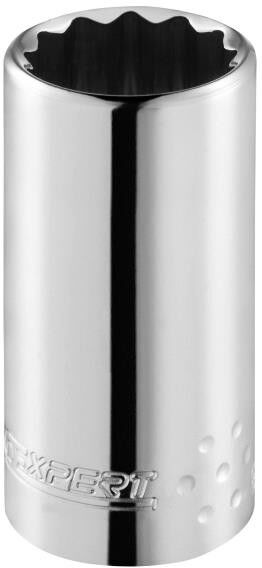
TONA EXPERT E117283 SocketLength [mm]: 79; Square Drive Tang Size [mm (inch)]: 12.5 (1/2); DIN/ISO: ISO 2725-1, DIN 3124; Material: Chrome Vanadium Steel; Shape: Long; Surface: Chromed, Polished; Work side (profile): Double Hexagon; Spanner Size: 176,99 £*Shipping: 8,45 £Secure redirect to the provider
-
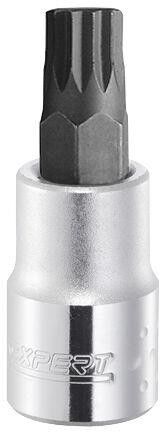
TONA EXPERT E032803 Reversible RatchetSpanner: Movable (joint); DIN/ISO: DIN 3122, ISO 3315; Tool handle type: Ergonomically Shaped Handle, 2-piece grip; Surface: Chromed, Polished; Number of teeth (ratchet mechanism): 72; Square Drive Tang Size [mm (inch)]: 12.5 (1/2); Length [mm]: 43754,99 £*Shipping: 8,45 £Secure redirect to the provider

-
Are you an expert in oxidation numbers?
Yes, I am an expert in oxidation numbers. I have a strong understanding of how to assign oxidation numbers to elements in chemical compounds and how to balance redox reactions. I am familiar with the rules and guidelines for determining oxidation numbers and have experience applying them to various chemical reactions and scenarios. I am confident in my ability to explain and teach others about oxidation numbers and their significance in chemistry. **
-
Are there negative square numbers?
No, there are no negative square numbers. A square number is the result of multiplying a number by itself, so it will always be a positive number. For example, (-2) squared is equal to 4, which is a positive number. Negative numbers can be squared to give a positive result. **
-
What are prime numbers and square numbers?
Prime numbers are positive integers greater than 1 that have no divisors other than 1 and themselves. In other words, they cannot be divided evenly by any other number except 1 and the number itself. Examples of prime numbers include 2, 3, 5, 7, 11, and so on. Square numbers are the result of multiplying an integer by itself. For example, 4 is a square number because it is the result of 2 multiplied by 2. Similarly, 9 is a square number because it is the result of 3 multiplied by 3. In general, the square of a number can be represented as n^2, where n is the integer. **
-
What is the word problem for square numbers and square roots?
The word problem for square numbers and square roots involves finding the side length of a square when given the area, or finding the area of a square when given the side length. For example, if a square has an area of 25 square units, you would need to find the side length of the square. Conversely, if a square has a side length of 7 units, you would need to find the area of the square. This type of problem helps students understand the relationship between square numbers and square roots. **

How can one write out square roots without using square numbers?
One way to write out square roots without using square numbers is to use the radical symbol (√) followed by the number inside the square root. For example, the square root of 2 can be written as √2. Another way is to use fractional exponents, so the square root of a number can be written as the number raised to the power of 1/2. For instance, the square root of 3 can be written as 3^(1/2). These methods allow us to represent square roots without explicitly using square numbers. **
How do you calculate square numbers?
To calculate a square number, you simply multiply a number by itself. For example, to find the square of 5, you would multiply 5 by 5, which equals 25. The formula for calculating a square number is n^2, where n is the number you are squaring. So, for any number n, its square would be n multiplied by n. **
Top-Angebote
Products related to TONA-EXPERT-E113910-Square:
-
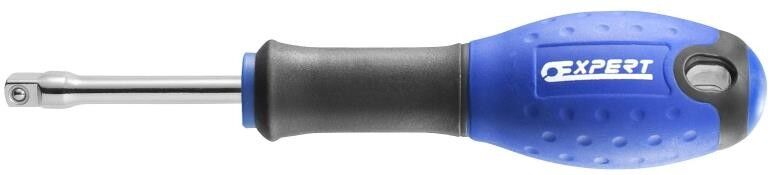
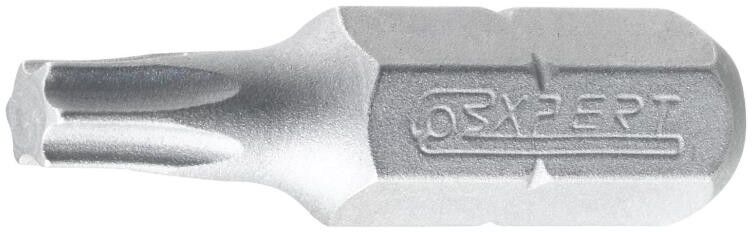
TONA EXPERT E113910 Square screwdriverColour: blue; Square Drive Tang Size [mm (inch)]: 6.3 (1/4); Length [mm]: 158; Material: Chrome Vanadium Steel; Surface: Polished; Tool handle type: Ergonomically Shaped Handle, 2-piece grip, with hanging hole; DIN/ISO: ISO 3315, DIN 31229,99 £*Shipping: 8,45 £Secure redirect to the provider
-
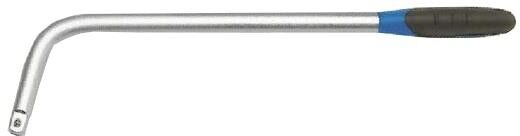
TONA EXPERT E032714 Square Drive HandleSquare Drive Tang Size [mm (inch)]: 12.5 (1/2); Length [mm]: 400; Material: Chrome Vanadium Steel; Shape: L Shape; Tool handle type: Ergonomically Shaped Handle, 2-piece grip; Surface: Matt, chrom-plated15,99 £*Shipping: 8,45 £Secure redirect to the provider
-
Why are the square numbers called square numbers?
Square numbers are called square numbers because they represent the area of a square with sides of equal length. For example, the number 4 is a square number because it represents the area of a square with sides of length 2. Similarly, the number 9 represents the area of a square with sides of length 3. This geometric interpretation is why these numbers are called square numbers. **
-
What are square numbers and square roots?
Square numbers are the result of multiplying a number by itself. For example, 4 is a square number because 4 x 4 = 16. Square roots, on the other hand, are the inverse operation of squaring a number. The square root of a number is a value that, when multiplied by itself, gives the original number. For example, the square root of 25 is 5 because 5 x 5 = 25. **
-
Are you an expert in oxidation numbers?
Yes, I am an expert in oxidation numbers. I have a strong understanding of how to assign oxidation numbers to elements in chemical compounds and how to balance redox reactions. I am familiar with the rules and guidelines for determining oxidation numbers and have experience applying them to various chemical reactions and scenarios. I am confident in my ability to explain and teach others about oxidation numbers and their significance in chemistry. **
-
Are there negative square numbers?
No, there are no negative square numbers. A square number is the result of multiplying a number by itself, so it will always be a positive number. For example, (-2) squared is equal to 4, which is a positive number. Negative numbers can be squared to give a positive result. **
Similar search terms for TONA-EXPERT-E113910-Square
-
TONA EXPERT E117283 SocketLength [mm]: 79; Square Drive Tang Size [mm (inch)]: 12.5 (1/2); DIN/ISO: ISO 2725-1, DIN 3124; Material: Chrome Vanadium Steel; Shape: Long; Surface: Chromed, Polished; Work side (profile): Double Hexagon; Spanner Size: 176,99 £*Shipping: 8,45 £Secure redirect to the provider
-
TONA EXPERT E032803 Reversible RatchetSpanner: Movable (joint); DIN/ISO: DIN 3122, ISO 3315; Tool handle type: Ergonomically Shaped Handle, 2-piece grip; Surface: Chromed, Polished; Number of teeth (ratchet mechanism): 72; Square Drive Tang Size [mm (inch)]: 12.5 (1/2); Length [mm]: 43754,99 £*Shipping: 8,45 £Secure redirect to the provider
-
What are prime numbers and square numbers?
Prime numbers are positive integers greater than 1 that have no divisors other than 1 and themselves. In other words, they cannot be divided evenly by any other number except 1 and the number itself. Examples of prime numbers include 2, 3, 5, 7, 11, and so on. Square numbers are the result of multiplying an integer by itself. For example, 4 is a square number because it is the result of 2 multiplied by 2. Similarly, 9 is a square number because it is the result of 3 multiplied by 3. In general, the square of a number can be represented as n^2, where n is the integer. **
-
What is the word problem for square numbers and square roots?
The word problem for square numbers and square roots involves finding the side length of a square when given the area, or finding the area of a square when given the side length. For example, if a square has an area of 25 square units, you would need to find the side length of the square. Conversely, if a square has a side length of 7 units, you would need to find the area of the square. This type of problem helps students understand the relationship between square numbers and square roots. **
-
How can one write out square roots without using square numbers?
One way to write out square roots without using square numbers is to use the radical symbol (√) followed by the number inside the square root. For example, the square root of 2 can be written as √2. Another way is to use fractional exponents, so the square root of a number can be written as the number raised to the power of 1/2. For instance, the square root of 3 can be written as 3^(1/2). These methods allow us to represent square roots without explicitly using square numbers. **
-
How do you calculate square numbers?
To calculate a square number, you simply multiply a number by itself. For example, to find the square of 5, you would multiply 5 by 5, which equals 25. The formula for calculating a square number is n^2, where n is the number you are squaring. So, for any number n, its square would be n multiplied by n. **
* All prices are inclusive of VAT and, if applicable, plus shipping costs. The offer information is based on the details provided by the respective shop and is updated through automated processes. Real-time updates do not occur, so deviations can occur in individual cases. ** Note: Parts of this content were created by AI.