Buy validcc.eu ?
We are moving the project
validcc.eu .
Are you interested in purchasing the domain
validcc.eu ?
domain@kv-gmbh.de · 0541-91531010
Buy validcc.eu ?
Which TV channels can be received at Domaine Long Pré?
At Domaine Long Pré, guests can receive a variety of TV channels, including popular international channels such as CNN, BBC, and Eurosport. Additionally, there are channels available in different languages, catering to the diverse needs of the guests. The wide selection of TV channels ensures that guests can stay updated with news, sports, and entertainment during their stay at Domaine Long Pré. **
What does 'du brunzkache du ogsoachte' mean?
The phrase "du brunzkache du ogsoachte" is in the Bavarian dialect of German and translates to "you're crazy, you're delusional" in English. It is used to express disbelief or to dismiss someone's ideas or actions as irrational or nonsensical. **

Similar search terms for Domaine-du-Seminaire-Domaine
Top-Angebote
Products related to Domaine-du-Seminaire-Domaine:
-
"""Domaine du Cayron""" """Domaine du Cayron Gigondas 2022 Red Wine - France""""""Blend: 78% Grenache, 14% Syrah The 2022 Gigondas checks in as 78% Grenache, 14% Syrah, and the rest Cinsault and Mourvèdre, raised in foudres, with the Syrah in demi-muids. It's a killer effort offering beautiful darker fruits supported by some..."35,97 $*Shipping: 0,00 $Secure redirect to the provider
-
"""Domaine du Terme""" """Domaine du Terme Gigondas 2023 Red Wine - France""""""Blend: 80% Grenache, 20% Syrah A gorgeous wine that's impeccably made, the 2023 Gigondas Tradition shows lively peppery red berries, Provençal garrigue, and sappy floral nuances. Based on 80% Grenache and 20% Syrah and aged in tank then foudre for..."34,97 $*Shipping: 0,00 $Secure redirect to the provider
-
"""Domaine du Tariquet""" """Domaine du Tariquet Chardonnay 2024 White Wine - France""""""Medium yellow color with green reflections. A subtle nose with aromas of acacia flower. On the palate, it is a complex wine with notes of white flowers and yellow fruits. A fresh and delicious finish. Pair with sole meunière, grilled lobster, lamb..."21,97 $*Shipping: 0,00 $Secure redirect to the provider


-
Do you say "Du backst" or "Du bäckst"?
The correct spelling is "Du backst." The verb "backen" is conjugated as "backst" in the second person singular form. The umlaut on the letter "a" is not used in this conjugation. **
-
Is it said "Du backst" or "Du bäckst"?
The correct form is "Du backst." The verb "backen" means "to bake" in German, and when conjugated for the second person singular (du), it takes the form "backst." The umlaut (ä) in "bäckst" is incorrect in this context. **
-
Does it say "Du hältst" or "Du hältst"?
It says "Du hältst." **
-
Does it say "Du backst" or "Du bäckst"?
It says "Du backst." The verb "backen" (to bake) is conjugated as "backst" in the second person singular form in the present tense. The form "Du bäckst" would be incorrect in standard German. **


Why do we say "du hältst" but not "du setzt" instead "du setzt dich"?
In German, the verb "setzen" typically requires a direct object, so when using it in the second person singular form, it is often accompanied by a reflexive pronoun to indicate that the action is being performed on oneself. This is why we say "du setzt dich" instead of just "du setzt." On the other hand, the verb "halten" does not require a direct object, so it can be used on its own without a reflexive pronoun, resulting in "du hältst." This distinction in usage is a characteristic of the German language and its grammar rules. **
What does "Du weißt nicht, was du willst?" mean?
"Du weißt nicht, was du willst?" is a German phrase that translates to "You don't know what you want?" in English. It is often used to express frustration or confusion towards someone who seems indecisive or unsure about their desires or intentions. The phrase can be used in various contexts, such as in relationships, decision-making, or when someone is being wishy-washy about their choices. **
Top-Angebote
Products related to Domaine-du-Seminaire-Domaine:
-
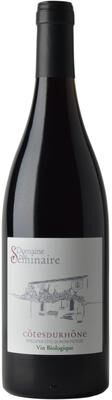
"""Domaine du Seminaire""" """Domaine du Seminaire Cotes du Rhone 2024 Red Wine - France""""""Ruby color with purple highlights, whose aromas are reminiscent of wild berries with licorice notes. Balanced wine on the palate showing roundness and fruit."""21,97 $*Shipping: 0,00 $Secure redirect to the provider
-
"""Domaine du Seminaire""" """Domaine du Seminaire Cotes du Rhone Villages Valreas 2024 Red Wine - France""""""The color is purple, the nose flattering and carried on jammy fruit like blackcurrant and cherry jam. The palate is warm in character. Structured, smooth and balanced, it offers delicious coated tannins. The finish is consistent with the nose on a..."24,99 $*Shipping: 0,00 $Secure redirect to the provider
-
"""Domaine du Cayron""" """Domaine du Cayron Gigondas 2022 Red Wine - France""""""Blend: 78% Grenache, 14% Syrah The 2022 Gigondas checks in as 78% Grenache, 14% Syrah, and the rest Cinsault and Mourvèdre, raised in foudres, with the Syrah in demi-muids. It's a killer effort offering beautiful darker fruits supported by some..."35,97 $*Shipping: 0,00 $Secure redirect to the provider
-
Which TV channels can be received at Domaine Long Pré?
At Domaine Long Pré, guests can receive a variety of TV channels, including popular international channels such as CNN, BBC, and Eurosport. Additionally, there are channels available in different languages, catering to the diverse needs of the guests. The wide selection of TV channels ensures that guests can stay updated with news, sports, and entertainment during their stay at Domaine Long Pré. **
-
What does 'du brunzkache du ogsoachte' mean?
The phrase "du brunzkache du ogsoachte" is in the Bavarian dialect of German and translates to "you're crazy, you're delusional" in English. It is used to express disbelief or to dismiss someone's ideas or actions as irrational or nonsensical. **
-
Do you say "Du backst" or "Du bäckst"?
The correct spelling is "Du backst." The verb "backen" is conjugated as "backst" in the second person singular form. The umlaut on the letter "a" is not used in this conjugation. **
-
Is it said "Du backst" or "Du bäckst"?
The correct form is "Du backst." The verb "backen" means "to bake" in German, and when conjugated for the second person singular (du), it takes the form "backst." The umlaut (ä) in "bäckst" is incorrect in this context. **
Similar search terms for Domaine-du-Seminaire-Domaine
-
"""Domaine du Terme""" """Domaine du Terme Gigondas 2023 Red Wine - France""""""Blend: 80% Grenache, 20% Syrah A gorgeous wine that's impeccably made, the 2023 Gigondas Tradition shows lively peppery red berries, Provençal garrigue, and sappy floral nuances. Based on 80% Grenache and 20% Syrah and aged in tank then foudre for..."34,97 $*Shipping: 0,00 $Secure redirect to the provider
-
"""Domaine du Tariquet""" """Domaine du Tariquet Chardonnay 2024 White Wine - France""""""Medium yellow color with green reflections. A subtle nose with aromas of acacia flower. On the palate, it is a complex wine with notes of white flowers and yellow fruits. A fresh and delicious finish. Pair with sole meunière, grilled lobster, lamb..."21,97 $*Shipping: 0,00 $Secure redirect to the provider
-
Does it say "Du hältst" or "Du hältst"?
It says "Du hältst." **
-
Does it say "Du backst" or "Du bäckst"?
It says "Du backst." The verb "backen" (to bake) is conjugated as "backst" in the second person singular form in the present tense. The form "Du bäckst" would be incorrect in standard German. **
-
Why do we say "du hältst" but not "du setzt" instead "du setzt dich"?
In German, the verb "setzen" typically requires a direct object, so when using it in the second person singular form, it is often accompanied by a reflexive pronoun to indicate that the action is being performed on oneself. This is why we say "du setzt dich" instead of just "du setzt." On the other hand, the verb "halten" does not require a direct object, so it can be used on its own without a reflexive pronoun, resulting in "du hältst." This distinction in usage is a characteristic of the German language and its grammar rules. **
-
What does "Du weißt nicht, was du willst?" mean?
"Du weißt nicht, was du willst?" is a German phrase that translates to "You don't know what you want?" in English. It is often used to express frustration or confusion towards someone who seems indecisive or unsure about their desires or intentions. The phrase can be used in various contexts, such as in relationships, decision-making, or when someone is being wishy-washy about their choices. **
* All prices are inclusive of VAT and, if applicable, plus shipping costs. The offer information is based on the details provided by the respective shop and is updated through automated processes. Real-time updates do not occur, so deviations can occur in individual cases. ** Note: Parts of this content were created by AI.